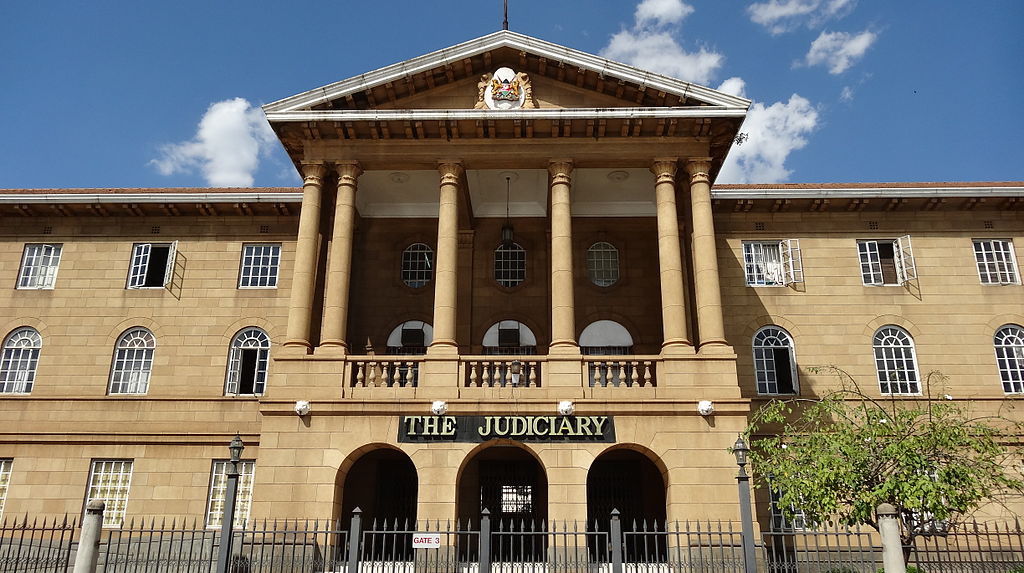
On 16 March 2013 Zimbabweans voted with an overwhelming “yes” for a draft constitution. The draft was published in the Gazette on 29 March 2013 as Constitution of Zimbabwe Amendment (No 20) Act.
Having been approved by the bicameral parliament in mid-May, the President on 22 May 2013 signed it into law to become the new constitution of Zimbabwe.
The general elections were held on 31 July and on the 3rd of August 2013 the Zimbabwe Electoral Commission announced that the incumbent President Mugabe of Zanu-PF had won the elections with 61%. But for the application to challenge the election result filed by MDC-T on 09 August, the president-elect would have been sworn in on the ninth day – 12 August (cf: s93 and 94). The challenge will be heard by the “newly” established Constitutional Court.
However, owing to the transitional provisions in the new constitution judges of the Supreme Court will double as the judges of the Constitutional Court. Accordingly, in the first seven years of the new constitution, the Supreme Court judges will continue to hear constitutional cases. The immediate change is that instead of five judges hearing a matter now nine judges have to hear the case (cf: s166).
The nine justices of the new Constitutional Court (set to hear the challenge to the presidential election) are Chidyausiku J (Chief Justice), Malaba J (Deputy Chief Justice), Ziyambi, Gwaunza, Garwe, Makarau, Gowora, Patel and Hlatshwayo JJ. Hlatshwayo and Patel JJ were sworn into office by President Mugabe on 22 May 2013 shortly before he signed the new constitution into law. Therefore, factually the bench of the new Constitutional Court is composed of Justices appointed under the Lancaster Constitution.
Good governance, constitutionalism and sustainable development is the golden triptych towards which Africa is striving. This article focuses on one on leg of the triptych, constitutionalism.
Constitutionalism is informed by the Madisonian perspective that ‘men are not angels’ and thus the need to have ‘auxiliary precautions’ to check those in power. Professor Fombad a constitutional law expert argues that the courts constitute an important bulwark of constitutionalism standing as the last line of defence of constitutionalism. One ingredient to an independent judiciary is openness and transparency in the appointment process.
Under the Lancaster constitution the President was vested with carte blanche powers in the appointment of judges to the bench. The process of appointing judges was criticised as being flawed and opaque Anthony Gubbay a former Chief Justice has noted that the government of Zimbabwe has had an avowed policy of appointing ‘as judges to both the Supreme and High Courts, persons known to be sympathetic to its political ideology’.
The Civic Alliance for Democracy and Governance mincing no words has charged the government with having ‘pushed out independent judges and replaced them with bootlickers of the Mugabe regime’. The judgments of the Supreme Court post the year 2001 such as Mike Campbell (Pvt) Ltd v Minister of National Security Responsible for Land Reform and Resettlement and Mawarire v Mugabe and Others CCZ 1/13 have not stirred confidence on the independence of the judiciary.
It is trite that judges must never be bedfellows with politicians because this would undermine the rule of law which is the heartbeat of a constitutional democracy. The new constitution aims towards this by providing that the appointment of judges must be permeated by an aura of openness and transparency (cf: s191).
Marking a seismic shift from the Lancaster Constitution, the procedure for the appointment of judges involves advertising of the position, nominations, public interviews of applicants by the Judicial Service Commission (JSC) and the President making appointments from a list submitted by the JSC. Hence it is likely that judges appointed under this new order when faced with politically sensitive cases will be independent-minded which has hitherto not been the case.
However, the seismic shift introduced by the new constitution will not operate immediately with regards to the new Constitutional Court. Recall that the current judges of the Supreme Court will double as Constitutional Court Justices and a challenge to the first presidential election will be heard by the Supreme Court in terms of section 93 (cf: Part 7 of the Sixth Schedule). Therefore, it would not require a seer to predict to which direction the pendulum is likely to swing in the application made by the MDC-T to the presidential election.
A likely prognosis is the decision going against MDC-T prompting them to lash out at the judiciary – which they have done a number of times. However, a cynic would argue that the blame is squarely on the shoulders of the negotiators representing the MDC-T in the drafting of the new constitution. How?
MDC-T could have pushed for a Constitutional Court established following the procedure laid out in the new constitution. The cynic would point out that it is an exercise in futility to pour new wine into old bottles.
That cynic is me!
Comments
Share On