This year (2014) marks a milestone in South African history. It’s been 20 years of constitutional democracy and we continue to live in relative peace. Also, Nelson Mandela passed and the 1994 peace accord still stands. Months have passed and South Africa has allayed fears that the country would spontaneously combust after Mandela’s death.
South Africa’s history of racial, social and political oppression is well-documented. However, lurking beneath the self-congratulatory 20-year-milestone introspective exercise, there is a lesser-told truth of a bloody war waged against women. This war is fought in public life: in malls, in schools, in churches, and even in Parliament. More horrifyingly, this war is fought in our most intimate spaces: our homes and our bedrooms. It is an indiscriminate war––consuming defenseless children, frail women, teenagers and powerful women alike.
Democracy and the Constitution
It is true indeed that South Africa’s much-revered Constitution (1996) provides a clear blueprint for gender equality. Section 1 of the Constitution provides that South Africa is founded on the values of human dignity, the achievement of equality and the advancement of human rights and freedoms, non-racialism and non-sexism.
Section 9 of the Constitution provides that everyone is equal before the law and has the right to equal protection and benefit of the law. Section 10 provides that everyone has inherent dignity and the right to have their dignity respected and protected. Section 12(2) provides that everyone has the right to bodily and psychological integrity, which includes the right–– (a) to make decisions concerning reproduction and (b) to security in and control over their body.
The jurisprudence emanating from South African courts has entrenched these rights. For example, in F v Minister of Safety and Another — a case about a thirteen year old girl who was brutally raped by a police officer on standby duty — the Constitutional Court held that the state is obliged by the Constitution and international law to prevent violence against women which is a form of gender discrimination. The state must protect the dignity, freedom and security of women. The Court held the Minister liable for damages. Deputy Chief Justice Moseneke wrote, quite memorably, that:
Many men of our society, not unlike the policeman who raped Ms F, continue to force themselves on women and on girl-children. Often, with impunity, men forcibly violate women’s bodies, privacy, dignity and self-worth, freedom, and the right to be treated with equal regard.
The threat of sexual violence to women is indeed as pernicious as sexual violence itself. It is said to go to the very core of the subordination of women in society. It entrenches patriarchy as it imperils the freedom and self-determination of women. It is deeply sad and unacceptable that few of our women or girls dare to venture into public spaces alone, especially when it is dark and deserted. If official crime statistics are anything to go by, incidents of sexual violence against women occur with alarming regularity. This is so despite the fact that our Constitution, national legislation, formations of civil society and communities across our country have all set their faces firmly against this horrendous invasion and indignity imposed on our women and girl-children.
F was not an isolated incident. It epitomises the scourge of violence against women and children in our society. In a similar case in K v Minister of Safety and Security, a young woman was raped repeatedly by three uniformed policemen. She had accepted a lift from them after she found herself stranded in the early hours of the morning.
The courts have often used the rights and values I enumerated above to come the aid of women. In Christian Lawyers Association v Minister of Health, a case dealing abortions, Deputy Judge President Majapelo held that:
[The] constitution protects the right of a woman to determine the fate of her own pregnancy. It follows that the State may not unduly interfere with a woman’s right to choose whether or not to undergo an abortion.
In Daniels v Campbell and Others, which dealt with maintenance of and intestate succession by persons married according to Muslim rites, Sachs J wrote:
The value of non-sexism is foundational to our Constitution and requires a hard look at the reality of the lives that women have been compelled to lead by law and legally-backed social practices….The reality has been and still in large measure continues to be that in our patriarchal culture men find it easier than women to receive income and acquire property.
These cases, however, are a drop in a deep, dark, bloody nightmare of brutal violence and blood-curling screams.
More of the same?
A truthful introspective exercise of our democracy and freedom twenty years later must ask whether things have changed for women. When we talk of freedom from racial domination, of reconciliation, we must also speak about freedom of women from the scourge of gender violence and oppression. A truthful answer is that women are not free! No, not by any stretch of imagination.
Denialists, on one hand, exalt the empty constitutional promise of freedom for women. Apologists, on the other hand, announce that change is creeping slowly. This is a lie and a perversion of the values on which the South Africa is built.
It is reported that South Africa has a female homicide rate six times higher than the global average. Half of these women are murdered by their intimate partners. In South Africa a woman is killed by her partner every six hours.
Women are not only killed, they are raped and mutilated. While some women are raped because they are purportedly “too woman” and provoking “helpless” men, others are raped for “not being woman enough”. Like Mvuleni Fana, a victim of “corrective rape,” whose assailant claimed he was going to turn her into a “real woman”. A woman is raped in South Africa every four minutes.
This is violence of genocidal proportions!
This war waged against women is not only physical, it is also psychological. Women are shamed and humiliated into submission; their inherent human dignity wrecked and trodden in full view of the world by men, and sometimes other women, wrought by patriarchy.
South Africans watched as Nwabisa Ngcukana was stripped, humiliated and assaulted at the Noord Street taxi rank in Johannesburg for wearing a miniskirt.
This psychological warfare is not only waged against the helpless women in a testosterone-buzzed taxi rank, even powerful women are not immune. Lindiwe Mazibuko, then leader of the official opposition in Parliament, was humiliated and “called to order” for “dressing inappropriately”. Instead of defending her, the ruling party went on attack, claiming that “Mazibuko ought to lead by example in ensuring that her [Members of Parliament] conduct themselves decently and civilly in this institution.”
Women’s Day and Women’s Month
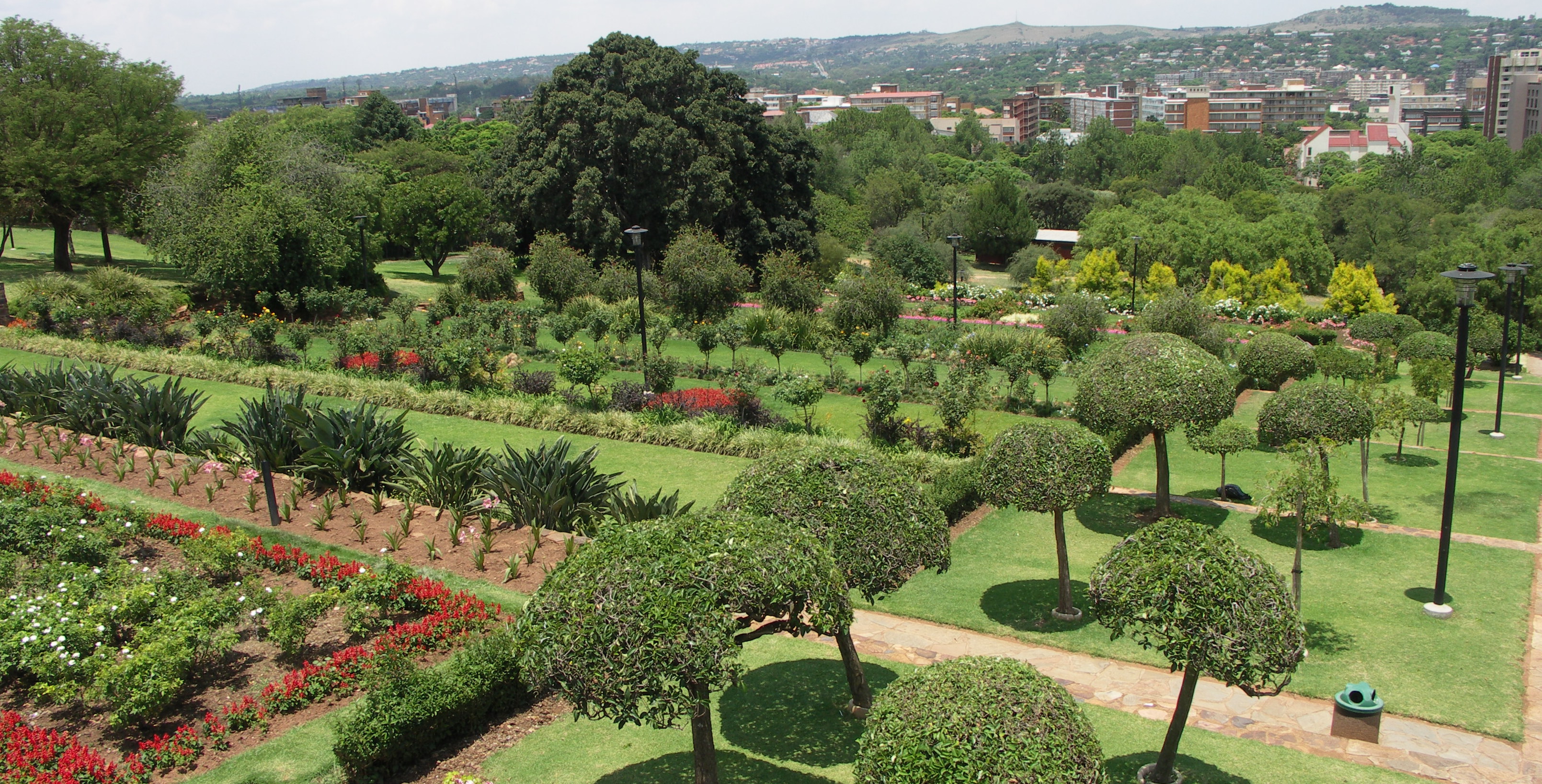
9 August is National Women’s Day, a public holiday in South Africa. It commemorates a fateful day in 1956 when more than twenty thousand women marched to the Union Buildings (the executive situ) to protest racially oppressive laws. The women famously declared “Wathint’ imboko, wathint’ itshe!” (You struck women, you struck a rock!) This day now coincides with National Women’s Month.
However, more than half a century after that day, women lurk behind a murderous detention camp of unfreedom, ignored by denialists and apologists of patriarchy. Men in South Africa are content to make a farcical show in a backward-looking celebration of yesterday’s heroes, all while women are being humiliated, mutilated and murdered in droves!
Women’s Day and Women’s month are a farce, unless men honestly admit to this unjust and senseless war. Such admission will also be farcical if men don’t put down their weapons of patriarchy (physical and psychological violence). Men must become active participants in a national programme of reparation. We must repair the status of women in our society. We must uproot deep-seated political and socio-economic prejudices.
If you want to know where to start, there are important initiatives such as #KnowYourConstitution, a programme spearheaded by the Constitutional Court Trust, specifically the Trust’s ConHill Education Project. This project, which has several stakeholders, educates young children and youths about constitutional values and about rights.
Comments
Share On