“Ugandan Members of Parliament have recently revived efforts to pass a new ‘anti-homosexuality law’ as a “Christmas present to Ugandans”; this comes a few months after the Constitutional Court of Uganda struck down the Anti-Homosexuality Act of 2014 (AHA) on grounds that it was passed without the quorum required by the constitution,” writes Godiva Akullo.
The AHA, right from its introduction as a bill in 2009, created an international uproar. Many governments and international NGOs condemned the bill as a ‘draconian’ and regressive law due to the proposed death penalty for ‘repeat’ offenders.
The new bill, titled The Prohibition of Promotion of Unnatural Sexual Practices Bill, 2014, which is yet to be tabled before parliament does not explicitly mention homosexuality. However, it bears a close resemblance to AHA. Hon. Latif Ssebagala, a Member of Parliament, has recently, with permission of the Speaker of Parliament, put on the Parliamentary record a collection of signatures of 261 MPs who support the immediate tabling of this new law in order to ‘protect the values of Uganda.’ In light of its imminent passing, it is important to consider key features of the bill.
While the law does not explicitly mention homosexuality, it defines ‘unnatural sexual practice’ as: a sexual act between persons of the same sex, with or between transsexual persons; a sexual act with an animal; and, anal sex within the meaning of section 145 of the Penal Code Act. Section 145 of the Penal Code — currently the only law that prohibits homosexual acts — criminalises ‘Carnal Knowledge against the order of nature’. The definition of unnatural sexual acts in the bill lumps persons in same-sex relationships together with people who practice bestiality. A new feature of the bill is that ‘anal sex’ is explicitly included in the definition. If passed, the bill will criminalise not only anal sex between persons in same-sex relationships but also anal sex between heterosexual couples.
Another distinct feature of the bill is that it criminalises persons on the basis of sexual orientation as well as gender identity. The bill includes sex with transsexual persons and sex between transsexual persons in the definition of unnatural sexual acts. A transsexual person is defined as ‘a person born with the physical characteristics of one sex but who has undergone or is preparing to undergo sex- change surgery’.
An optimist might argue that since there is no mention of transgender people who have no intention of undergoing gender re-assignment surgery, such people are not criminalized. However, the ignorance of issues surrounding gender identity portrayed from this blanket criminalization of ‘transexuals’ indicates that the gender identity of transgender people who do not go through surgery is not recognized and they will be treated as homosexuals.
Section 2 of the bill is particularly wide. It prohibits any person from promoting or aiding and abetting the promotion of unnatural sexual practices. Among other things, the bill makes it a criminal offence for any person to lease or sublease premises for purpose of engaging in unnatural sexual practices. It is difficult to imagine the kind of questions a landlord would have to ask in order to conclude that this is the purpose of the lease. Not only does this section invite landlords to pry into their tenants’ private affairs, it gives landlords a license to arbitrarily evict tenants on suspicion of ‘unnatural sexual practices’ in order to avoid arrest and prosecution.
Many LGBT Ugandans are currently facing such arbitrary evictions. The bill will make it lawful for landlords to evict tenants who they suspect of being LGBT, regardless of whether or not they are engaging in ‘unnatural sexual practices’ on the premises. The evicted tenants have no recourse in law. It seems that the intention of the Members of Parliament is to ensure the homelessness of as many LGBT people as possible in a country where there is no public housing system or homeless shelters.
Because of the gap in the provision of social services by the government, many individuals depend on family for support. For instance, if one can no longer afford to rent a house or raise their children, the next available option is to move in with a family member until such a time as you are able to provide for yourself. At the same time, family members and other relatives remain one of the biggest threats to LGBT people in Uganda. There are reports of LGBT individuals being subjected to exorcism exercises, corrective rape and lynching at the hands of family members.
LGBT organisations and health providers to be prohibited?
Section 2 effectively criminalises the work of all the LGBT organizations currently operating in Uganda and many HIV/AIDS service providers that support them. It make it an offence to publish, advertise, print, broadcast or distribute any information intended or likely to facilitate engaging in unnatural sexual practices.
Organisations like Sexual Minorities Uganda (SMUG), Freedom and Roam Uganda (FARUG), and Ice Breakers Uganda (IBU), regularly disseminate information on safe sex practices for LGBT people. IBU recently opened up a clinic where it provides basic sexual and reproductive health care to members of the LGBT community in Uganda. If the bill is passed in its current form, all the people involved in carrying out sex education campaigns or providing medical assistance will be liable to imprisonment for 7 years.
Section 3 makes it a criminal offence for any person to fund or sponsor another person with intent to promote unnatural sexual practices. LGBT organizations in Uganda, like many NGOs, receive funding from donor organizations to run their programs. At first glance, it appears that this section is intended to criminalise such funding. However, the penalty created for the offence is imprisonment for 7 years, which does not apply to other ‘legal persons’ such as corporations that fund the activities of organizations doing LGBT work.
One interesting aspect of this law, particularly considering the actions of many anti-gay campaigners in Uganda in the past, is that it makes it an offence for any person to make any representation of a person engaged in unnatural sexual practices. This prohibition applies to publication, exhibition, cinematography, information technology or any other means. This offence, which carries a penalty of imprisonment for 7 years, would also cover the conduct of some anti-gay campaigners in Uganda who show fetish gay porn in public places such as churches in order to ‘educate’ the masses on the ‘dangers’ of homosexuality or local tabloids that publish pictures of people engaged in homosexual acts in order to ‘expose’ the vice.
Section 7 of the Bill provides that any person convicted of an offence under the law would be ineligible to apply for adoption, custody, guardianship or fostering of a child in Uganda. This creates a problem for LGBT Ugandans who have children, putting them at risk of losing their children simply because they are LGBT. It may also motivate parents, relatives and ex partners to challenge the parental rights of LGBT people by accusing them of homosexuality.
The bill prohibits trafficking in persons for purposes of engaging in unnatural sexual practices – this language similar to that used in international anti-trafficking laws. The offences of trafficking in persons and inducement to commit unnatural sexual practices specifically mention that the use of force, fraud or coercion is necessary for the offence to be committed.
Section 8 of the bill states that consent is not a defence to any offence under the Act, which means that it criminalises private consensual sexual conduct between adults as well. This bill, just like AHA before it, presents an uphill task for any person charged with enforcing it, particularly the sections relating to the use of information technology and match making.
The Anti-Homosexuality Act reincarnated?
The concerns raised with the AHA – its impact on freedom of expression, freedom of association, freedom of assembly and the right to privacy – apply equally, if not more so, to the PPUSP Bill. The prohibition of publications, broadcasts, printing, or publishing any material ‘intended to promote unnatural sexual acts’ shall, depending on how it is enforced, affect journalists, academics, health workers, LGBT activists and basically anyone who may write or disseminate information around any of the practices that the bill defines as unnatural.
If this law is passed in its current form, LGBT people and allies will not be able to freely meet and organise because any discussion would likely be criminal. LGBT organising in Uganda has already been pushed underground because it is frowned upon.
A few years ago, the Minister for Ethics and integrity interrupted and closed down a workshop organized by LGBT activists to discuss project planning and advocacy. He claimed that the workshop was illegal, which it wasn’t. Some members of the LGBT community sued him. The case, which was decided by the High Court after AHA was passed, has now been appealed. The new bill, if passed, will sanction such conduct by government officials, allowing them to shut down meetings on suspicion that ‘unnatural sexual practices’ are being discussed.
The bill defines ‘promotion’ as ‘recruiting, encouraging, soliciting, or inciting a person to engage in unnatural sexual practices by providing premises, distributing textual or visual material or any other means to interest a person in unnatural sexual practices.’ This definition is very wide and might include a university providing a platform to discuss issues surrounding homosexuality. It would capture, for example, a hotel providing a conference room to people who intend to discuss sexual and reproductive health issues, which of course include ‘unnatural sexual practices’; it would also include bloggers writing about homosexuality. The definition places an unnecessary burden on hotel owners and managers to question anyone booking a space on the content of the discussion they intend to have on the premises.
Like AHA before it, the bill has the effect of criminalising people who wish to provide much needed services like health care to LGBT Ugandans. It places lives at an even greater risk.
The inclusion of anal sex in the definition of unnatural sexual practices means that many of the provisions of the bill apply to heterosexual couples who engage in anal sex. If the bill is passed into law, it remains to be seen whether it would be enforced against both homosexual and heterosexual Ugandans.
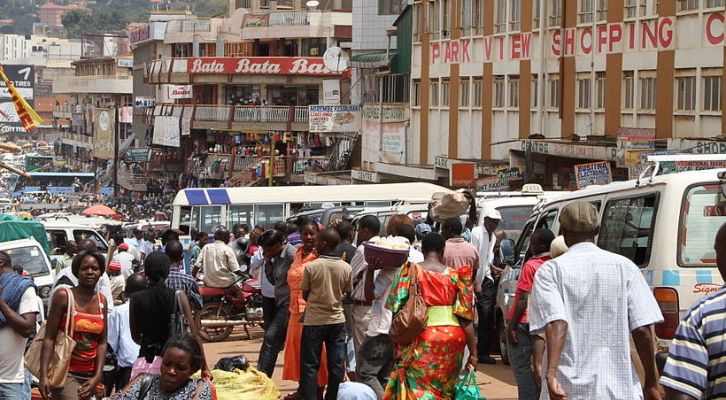
IMAGE: Andrew Regan/Wikimedia Commons
Comments
Share On